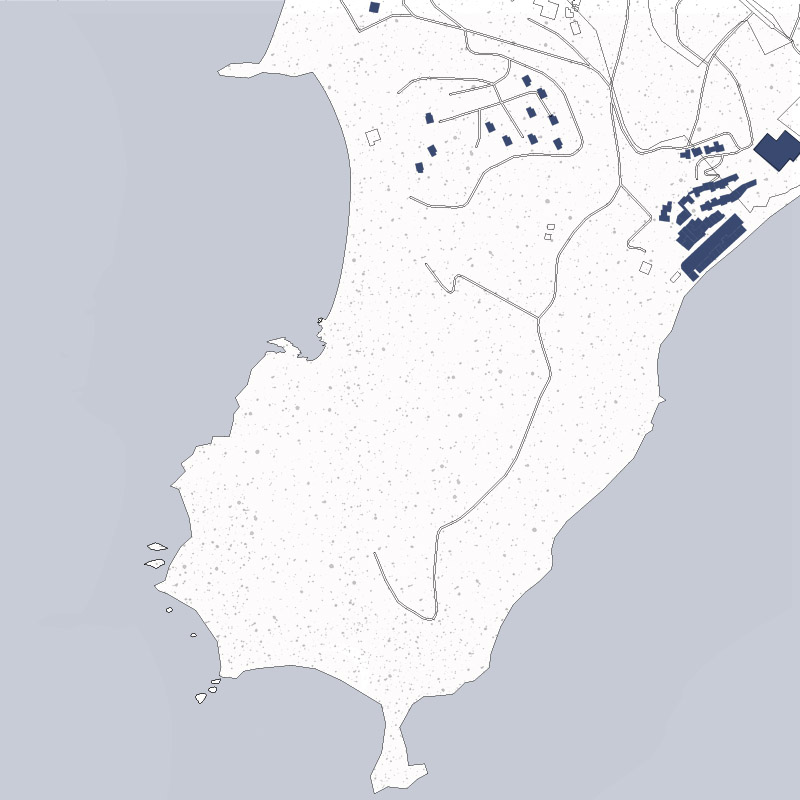
The object of study of this research work will be the Xenia of Skiathos, which has been in existence since 1963 with G. Nikoletopoulos as its architect, in the context of post-war government programs of tourism development in Greece. Methodologically, it will be based on the tripartite organization of social space formulated by the French philosopher and sociologist Henri Lefebvre and then it will attempt to use this scheme as a basis for the decoding and the critical analysis of the hotel at a spatial and experiential level. The paper will initially examine the different dimensions of Xenia's architectural design from its creation to the recent reuse and expansion of the hotel. Through this analysis, the paper attempts to trace the changes in the dominant logics of tourism: from the state policies of the 1960s to the recent "exploitation" of public property and the attraction of private investment. Beyond the field of politics, it will explore the space of Xenia through the perspective of workers and visitors. More specifically, alternative meanings, that the experienced space of the hotel can display, will be analyzed, in addition with the writer's personal experience as a worker in the hotel sector and in Xenia of Skiathos. Combining the historical/architectural analysis with the spatial, experiential approach, the research paper seeks a critical understanding of Xenia's architecture, as a cultural heritage, as a tool to promote tourism policies, but also as a space for claims of alternative perspectives and meanings.