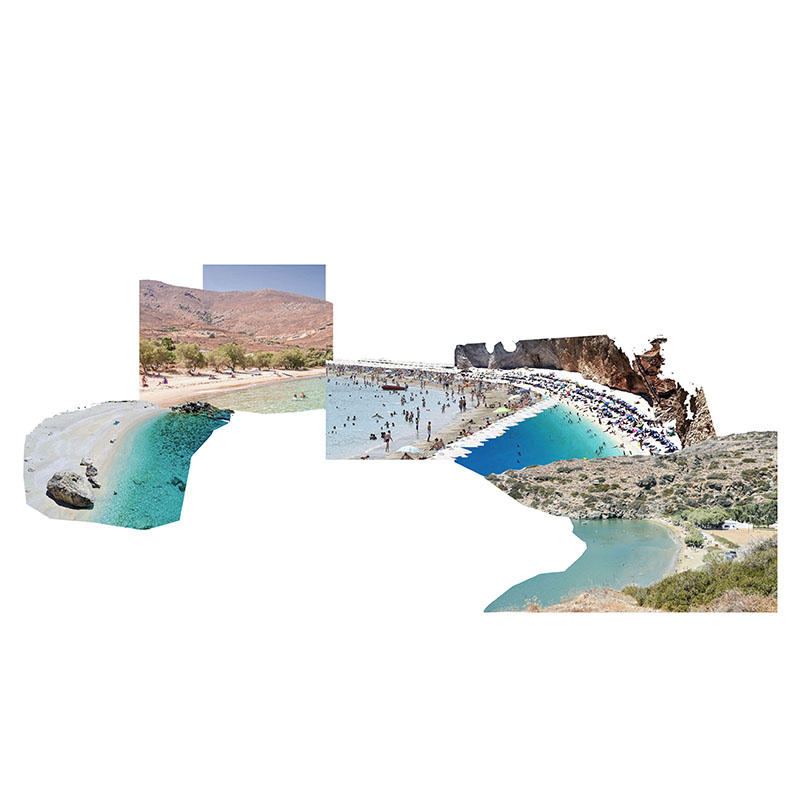
Tourism is a modernist vision that attracts millions of people worldwide to explore. It is a cultural phenomenon characterized by the discovery, investigation and learning of new ideas, values as well as cultures. However, the cultural and social character of tourism has deteriorated ever since it became solely profit-oriented, giving rise to several issues such as mass tourism. In Greece, which is a country with remarkable attractions, including its natural and cultural richness, unique climate, outstanding architecture and agriculture, tourism development has been established somewhat recently but, however, managed to leave a permanent imprint along its way. For instance, the uncontrollable growth of tourism has exacerbated social inequalities, thereby resulting in the disruption of economic and political cohesion. In addition to this, mass tourism has commodified local nature and architecture, resulting in loss of authenticity and dilution of the unique cultural heritage of landscapes or attractions with artificial characteristics. As a result, these alterations have brought up several consequences on not only the quality of the inhabitants’ lifestyle, but also on the quality of the tourists’ experience in the country. Therefore, in cases where tourism constitutes the foundation of a country’s development, its principles have to be redefined so that sustainable development becomes a necessity and not a trend. For this reason, individual consciousness and collective effort that involves the contribution of the state and government are essential features required to eliminate capitalism and turn tourist destinations into attractions of unique cultural heritage.