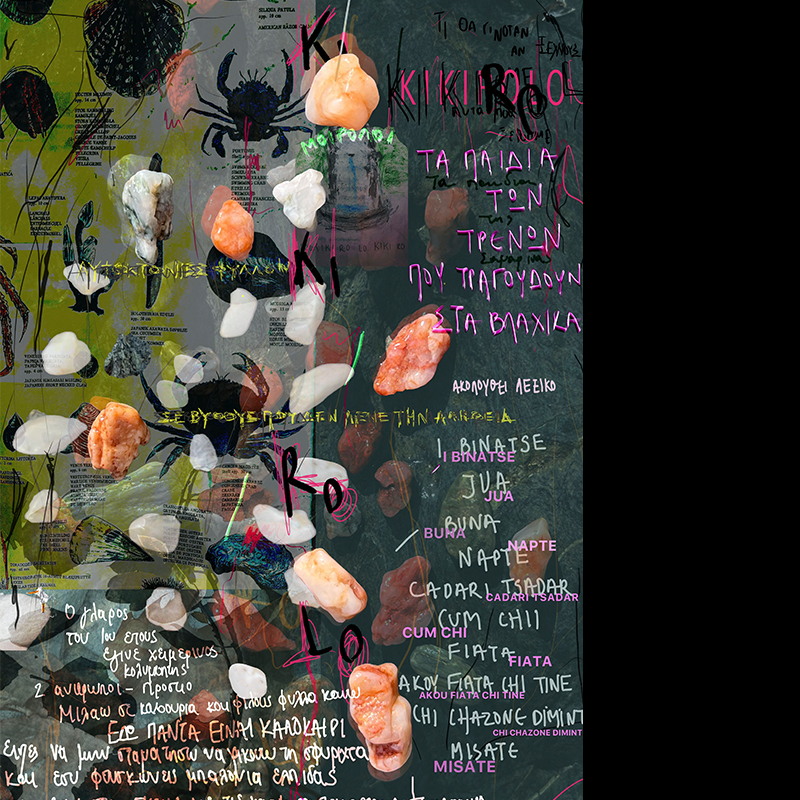
What is it that we miss when we look for lost time?Is it the relentless passage of days, so imperceptible that it assumes an abstract quality? I dare say it is the extraordinary moments that etch themselves in our memories, freezing time itself. Ultimately, it is the physicality of space that solidifies and renders time tangible. Every place we have inhabited during those special moments, the people we encountered who shaped us and were transformed by us, the indelible landscapes that left an indelible mark, and the pivotal events that shook us to the core - all these elements are what we yearn for.AND CONVERSELY, we miss the time that separates us from that place, we long for the passage of time that separates us from those places, as it intensifies the ache of nostalgia. The unbreakable unity of space-time is empirically verified, an exotopia observing the dynamics imposed by space and time. In the realm of memory's voice, the chronotope comprehends and expresses the intricate web of relationships between every real space and time, molding the historical circumstances of human existence and its interconnectedness with the world. Here, space and time are not transcendental abstractions; instead, they are intricately linked to a specific entity. Here space and time are not transcendental categories, here we are chained to a specific whole. Flies don't die here at 15 degrees. Miracles happen, which those who do not experience do not know. You take cloves and bite them. You suffer the unbearable. Here it's dawn and we're firing cannonballs. Here the children on the trains sing, they don't cry. The empirical reality. Primary research, the invisible microphone records reality with the least possible intervention, the paradox of recording a strange confession like a mirror but also a window open to the outside. We're talking about the emergence of the inside out. Aversion to anything staged really, we're talking about an anthropocentric approach. In the attempt to expand the definition of such an observation, the very vagueness presented by these records is an attempt to define itself. The event, the reaction, the encounter, the end, becomes the production and communication of anthropological knowledge that is constantly tested through these superimposed readings. How does primary research constitute a field of study, even a universal one? How does truth transcend conventionality? How can we ascertain if something is not entirely vanishing? How do the poetics of everyday speech manifest through the exploration of personal narratives? How do I find poetic release? How does a future perspective bring fresh insights? Ah, how I adore the games of observation! Yai sesame la dado, yai sesame, yai sesame la dado, yai soareme, and Kirolo tratsa, la dado, Ki Kirolo trats.