Design refers to a unified process that holds both functional and aesthetic value. During the 20th century, amidst the industrial revolution, society was driven by the possibilities of technological advancements, leading to a neglect of aesthetics and prioritizing quantity over quality due to industrial demands. Within this context, professionals in the field believed that there was a need for a means of informing the public about design developments. This medium would be the printed magazine.
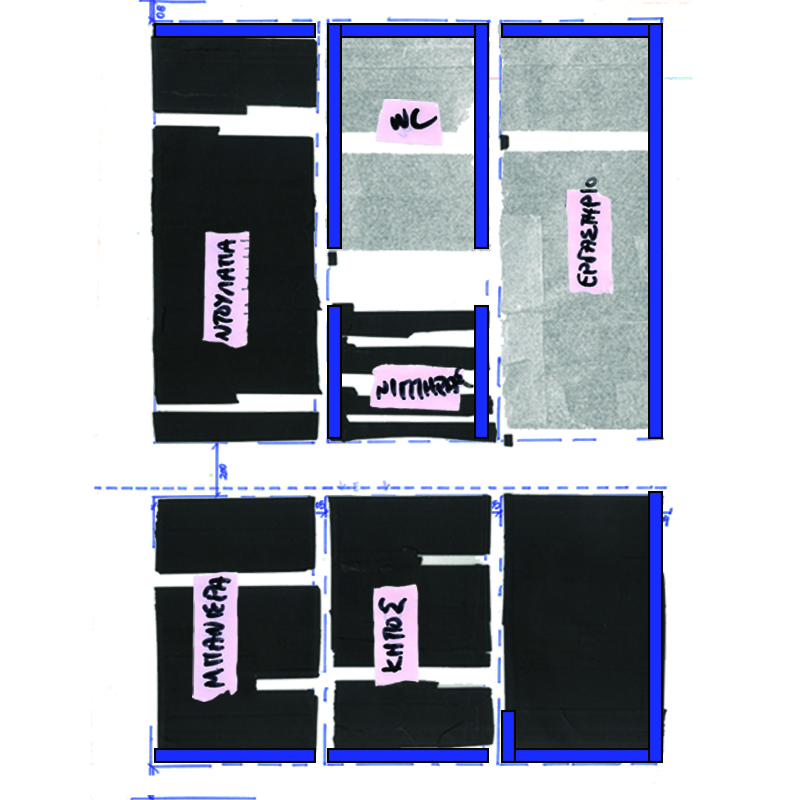
As design in magazines evolved alongside the artistic movements of each era, in Greece, one of the most significant magazines was "Architecture in Greece." As architects who lack knowledge of graphic design methods, in order to comprehend the structure of a layout, we require a correlation between graphic terms and architectural ones. By analyzing the publication in terms of program, section, elevation, and plan, the latter corresponds to the layout. Using an issue of Architecture in Greece as an example, with its strict and clear structure, we understand that architectural drawings can emerge and that they refer to other structures around us with equally strict arrangements.
The value of the printed magazine lies in its specialized information, which is not always found on the internet. As the gap between print magazines and online content continues to widen, the aim is to maintain a balance between the two, so that the printed medium does not (further) evolve into a luxury item.