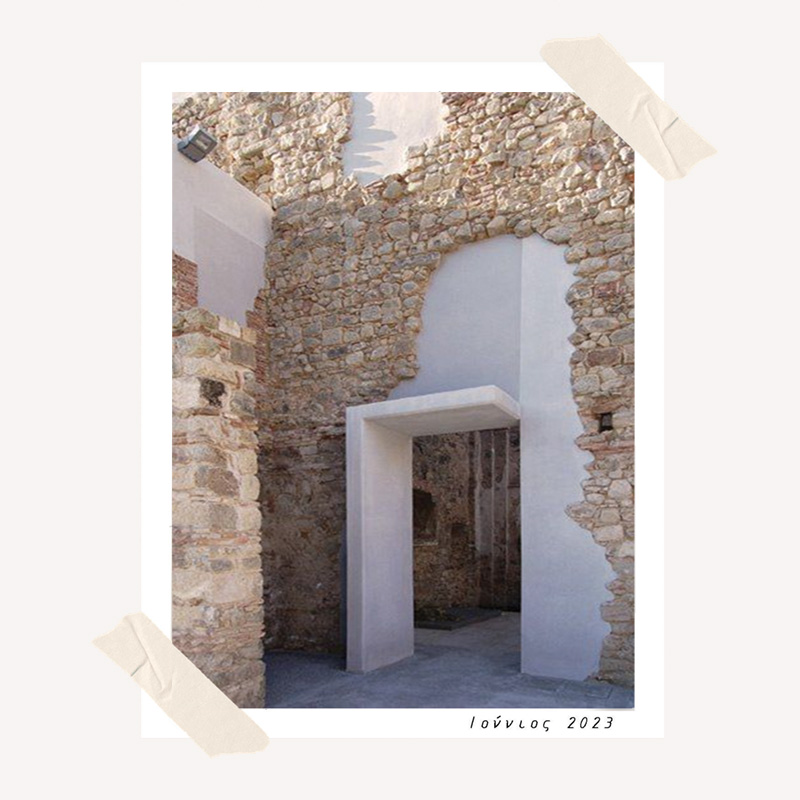
The inspiration for this research project was the observation of the abundance of dilapidated buildings and abandoned infrastructure, which remain unused in the urban fabric and express the passage of human creations into oblivion. In recent years there seems to be a trend in the architectural community towards the use of such buildings with a view to their reuse. Starting with an analysis of the definition of ruins, the characteristics of ruins are highlighted and the importance of the deterioration and erosion of materials in revealing the history of the building is emphasized. At the same time, the way in which an architect influences or even alters these elements through redesign is analyzed.
This is followed by a historical review of the relationship between people's interaction with ruins from the early 18th century and Romanticism to the present day. The end of the 20th century sees a change in the treatment of ruins as the need to redesign them intensifies. By analyzing the factors that influence redesign, we arrive at conclusions that emerged through our study of the examples we selected and additional cases we encountered during the search for our research project. The main concern of the architects in these cases is the preservation of the old ruins and the best way to enhance them through various steps, while always separating the original parts from the newly built ones in an attempt to keep the original character of the old buildings visible.