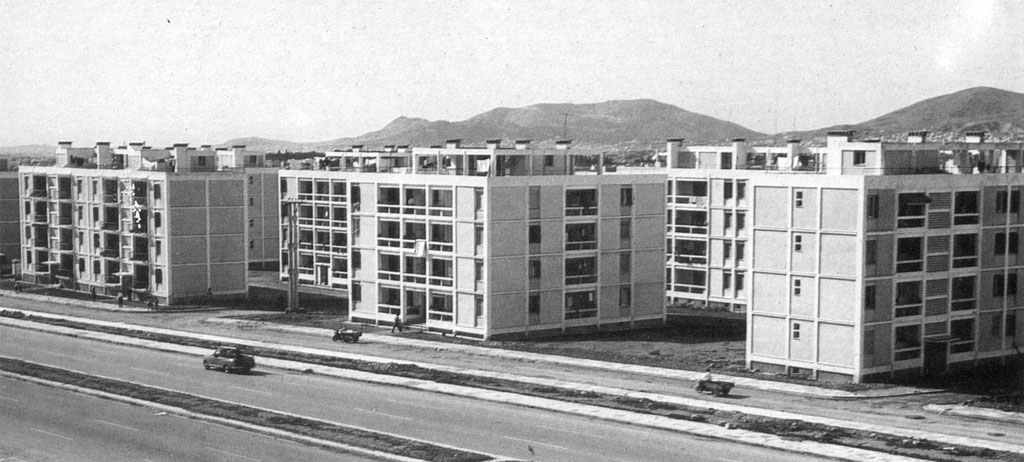
The political demand for planning and creating the working housing complexes (projects) is a result of the big economic, social and political changes that took place from the middle of the 20th century until today.
The countries of central Europe decided and carried out large state housing programs that have changed the image of the cities and the quality of life of a large number of workers. This new trend appeared in our country as well, after the war, with the establishment of the Workers' Housing Organization (OEK), in 1954.
But what are the stages (institutional-technical) that need to be followed in order to consolidate-make the initial decision of building the housing projects until the final study?
What is the process we have to go through to institutionally settle the working houses, proceed to the construction and, finally, create an area ready to be habitalized?
According to which architectural principles can all these be designed? How can public and private areas be altered structural in order to be functional?
The intention of this research and the writing of this essay is to find the way to involve the public mechanisms and the agencies to contribute into the creation and implementation of the projects. Both legislation and state agencies and local administrations play a catalytic role until the buildings are ready for the residents. An example of this study is the new housing projects in Grevena.